

New Mexico legislators are weighing four bills that would significantly reshape the state’s gun laws, with proposals ranging from permitless carry to enhanced penalties for felons and new restrictions tied to juvenile offenses and domestic violence protection orders.
The bills, introduced during the 57th Legislature’s second session in 2026, reflect competing visions for firearm policy in the state. Two Republican-backed measures would expand gun rights, while two Democratic proposals would tighten restrictions on who can possess weapons.
These bills can’t be considered unless Gov. Michelle Lujan Grisham agrees to add them to the 30-day budget session agenda and as of Wednesday The governor mentioned an assault weapons ban in her State of the State speech yesterday in Santa Fe but not these.
Juvenile gun offenses added to background checks

House Bill 25, introduced by Rep. Kathleen Cates, would treat certain juvenile firearm offenses as criminal convictions for gun possession purposes, a significant departure from the state’s traditional approach to juvenile records.
The legislation would prohibit adults who received juvenile dispositions for felony firearm offenses from possessing guns for 10 years after their disposition. These juvenile records would be transmitted to the FBI’s National Instant Criminal Background Check System.
Under current New Mexico law, juvenile dispositions are generally not considered criminal convictions and records are typically sealed. The legislation would create an exception for firearm-related felonies committed by juveniles.
“An adult subject to a juvenile disposition for a delinquent act involving use of a firearm” would be defined as anyone 18 or older whose juvenile disposition occurred within the past 10 years and who has not been pardoned, according to the bill text.
Violators caught with a firearm would face a third-degree felony charge. The bill would also designate these juvenile dispositions as convictions “punishable by imprisonment for a term exceeding one year” under the federal Gun Control Act of 1968 for a 10-year period.
Protection orders require immediate gun surrender
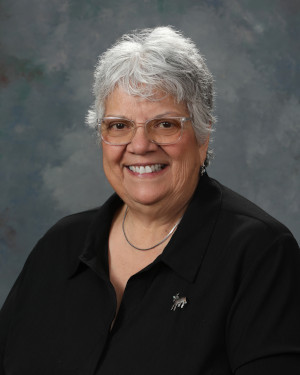
House Bill 67, sponsored by Rep. Joy Garratt and Sen. Debbie O’Malley, would mandate that every protection order issued under the Family Violence Protection Act require the restrained party to immediately surrender all firearms upon service of the order.
Current law allows judges to order firearm relinquishment only when they determine the restrained party “presents a credible threat to the physical safety” of household members. The proposed legislation would make gun surrender automatic in all protection order cases.
“Upon service of an order of protection, a restrained party shall immediately relinquish all firearms,” the bill states, though it would allow courts to “otherwise direct the relinquishment” with alternative timing or methods.
Under the existing statute, restrained parties have 48 hours to turn over weapons after an order determination. The new bill would require immediate compliance upon service, with firearms delivered to law enforcement agencies, officers or federal firearms licensees.
The legislation would also strengthen language throughout the Family Violence Protection Act, changing provisions that previously stated courts “may” order certain actions to requirements that courts “shall” issue such orders.
Enhanced penalties for felons with guns
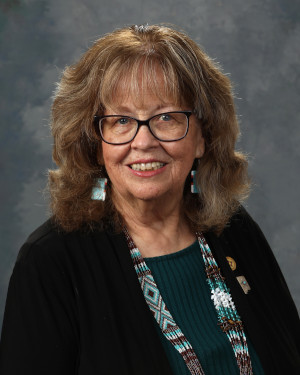
House Bill 49, also introduced by Rep. Garratt, would significantly increase criminal penalties for convicted felons found in possession of firearms, making repeat offenses a first-degree felony.
The bill would elevate felon-in-possession charges from the current third-degree felony to a second-degree felony for first offenses and a first-degree felony for subsequent violations.
Under current law, felons caught with firearms face a third-degree felony charge regardless of how many times they violate the prohibition. A separate provision imposes enhanced sentences for “serious violent felons” found with guns.
The proposed legislation would eliminate the distinction between regular felons and serious violent felons, applying the enhanced penalties across the board. First-time violators would face nine years imprisonment under second-degree felony sentencing guidelines, while repeat offenders could receive 18 years under first-degree felony provisions.
The bill maintains existing prohibitions preventing felons from receiving, transporting or possessing firearms or destructive devices. A “felon” under the statute is defined as someone convicted of a felony within the past 10 years who has not been pardoned and did not receive a deferred sentence.
Permitless carry proposal
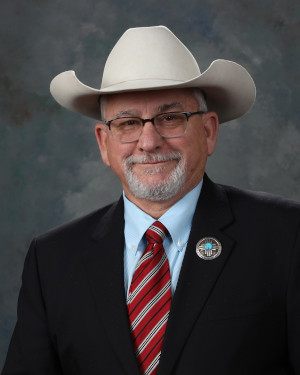

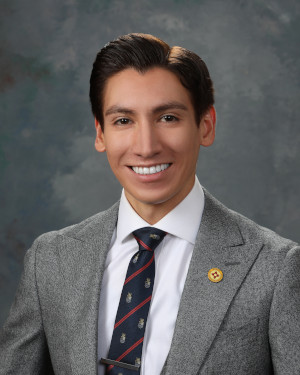
House Bill 81, sponsored by Reps. John Block, Stefani Lord and Randall Pettigrew would allow any person 18 or older who is not prohibited by state or federal law from possessing firearms to carry loaded weapons openly or concealed without a permit.
“A person who is eighteen years of age or older and is not prohibited by federal or state law or a court order from possessing or carrying a firearm may carry a loaded firearm on the person’s own person,” the bill states. “The carrying of the firearm may be concealed or open.”
Current New Mexico law requires residents to obtain a concealed handgun license from the Department of Public Safety before carrying a concealed loaded firearm. The bill would repeal Sections 30-7-2.2 through 30-7-3 of state law, which establish the concealed carry permit system.
The legislation would also amend the state’s criminal code definition of “deadly weapon” to exclude firearms entirely. Under the proposal, unlawful carrying of a deadly weapon charges would apply only to non-firearm weapons such as daggers, brass knuckles, switchblades and bludgeons.
Existing prohibitions on firearm possession by felons, domestic violence offenders and others subject to court orders would remain in effect. At least 27 states have adopted permitless carry laws, also known as constitutional carry, according to gun rights organizations.