

Commentary by Robert Lujan, Albuquerque — As a decade long Local 214 executive board member, I worked to elect Democrats alongside the larger brotherhood I proudly support as they push for permitting reform. My brothers in the trades need common sense leadership at the federal and local levels… now.
Commentary
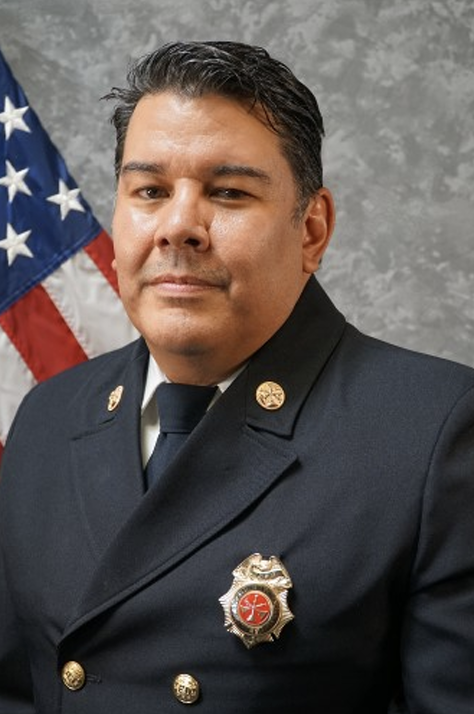
Robert Lujan is a retired battalion chief and paramedic with the Albuquerque Fire and Rescue Department where he also served as a member of the executive board of the International Association of Fire Fighters Local 244.
It is often quipped “democracy is the worst form of government… except for the rest of them.” We owe that gem to Winston Churchill. It is undoubtedly frustrating to watch Washington, D.C. quarrel over petty memes and semi-quotidian calls for impeachment.
Unfortunately the inherent design of our government fosters a roadmap to slow to a crawl reform; large or small. The parliamentary system is conditioned to deliberate to a point of exhaustion. In many respects the deliberation acts as a guardrail against quixotic policies, and in many ways the system promises to derail economic development projects that otherwise left alone would translate to high-wage, permanent jobs which themselves translate to employee benefits, home ownership, family planning, and a formidable economy. These conditions of this one particular social contract is what unions were created to provide.
Under union representation, labor – industry’s greatest asset – was to be afforded their piece of the American dream. This one social contract, defined by employment protections, workplace safety, and collective bargaining has historically been introduced, debated, and codified by elected Democrats which ushered in a relationship between labor and the democratic party that reached quasi-sacred territory. Until recently. It would be irresponsible to suggest that the Democratic Party has abandoned union causes but the party’s shift in priorities is one of public record and may explain why it may, in fact, be that unions are abandoning an “all-in” position towards democrat candidates.
Unions have traditionally been a virtual ATM for Democrats. However, the party’s shift from center-left to far-left has led unions to make hard decisions about what it means to be unequivocally married to their longtime partners. Locally and nationwide, unions have found themselves staring down the gun barrel of job-killing legislation with the finger of the party’s left-wingers on the trigger. There is a vast reservoir of good will between unions and the party and I am certain a course correction is viable sooner rather than later. Rest assured the course correction will not be in the form of bureaucratic evolution.
But there is evidence that permitting reform legislation could offer the lifelong friends a bridge in the gap. Locally, the evidence resides both in the governor’s charge to her GRID Council appointees to address permitting reform and rumblings amongst state legislators to remove the onerous redundancy regarding permit applications currently plaguing economic development projects in the queue.
Nationally the vehicle to permitting reform is the bi-partisan SPEED Act. The SPEED Act is a bi-partisan effort to bring stranded wind, solar, carbon-capture, and grid reliability projects online. These projects in New Mexico alone represent over $100 million in stalled economic development which of course means the potential hijacking of thousands of jobs… many union. The SPEED Act is currently being negotiated by members and staff of the Senate Energy and Natural Resources Committee (SENRC). New Mexico’s Senior Senator and ranking Democrat on the Committee, Martin Heinrich, has been a champion of similar bi-partisan efforts to streamline permits and unleash environmentally sound projects. This is evident in his 2024 vote to advance the Energy Permitting Reform Act.
Naturally, bi-partisan negotiations will require Democrats to allow projects heralded by their Republican counterparts. And many of these projects will be oil and gas related but New Mexico is an oil and gas state and all the projects being eyed by the SENRC represent the opportunity for a skilled union laborer to enjoy the benefits of the social contract forged by the Democratic Party.