
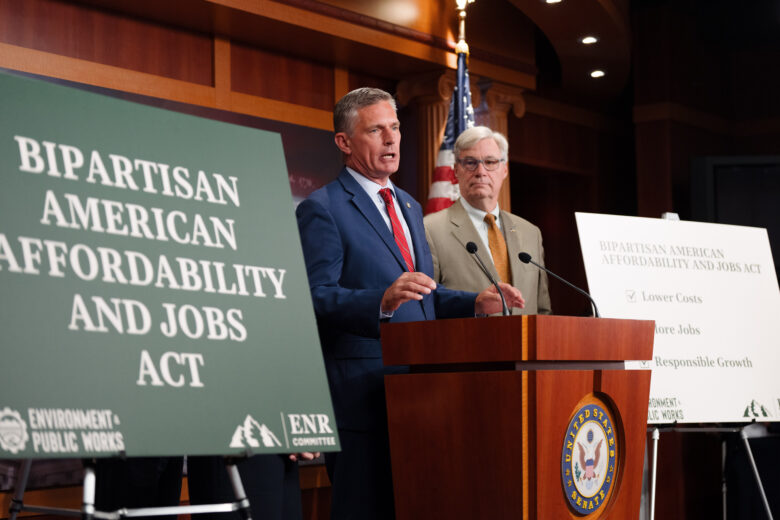
The New Mexico News — Undeterred by opposition from national and local environmental groups and New Mexico pueblos, Senator Martin Heinrich and a bi-partisan group of cosponsors are moving forward on Monday, the first day senators return to work after the election, with the first of a series of planned votes to advance the Bipartisan American Affordability and Jobs Act with a few last-minute amendments designed to address Tribal and other concerns.
Heinrich and his cosponsors have spent months making the case for the bill that requires federal agencies to move more quickly to review large scale infrastructure projects, sets limits on the time for opponents to file court challenges and prohibits presidential administrations from undoing permits already approved by their predecessors.
In October, Heinrich told New Mexico Political Report that the bill would unlock billions of dollars in clean energy investment to modernize the nation’s electric grid and speed our transition to clean energy. In an appearance with state construction trades leaders, he noted that those projects could create thousands of jobs in New Mexico alone over the next decade. An analysis of the bill by the nonprofit Center for Climate and Energy Solutions found that provision in the bill to “reduce barriers” to clean energy production would keep household electricity bills from increasing by $50 to $78 annually by 2040 and that energy sector emissions would reduce by about 20% as new cleaner energy projects came online, which would prevent approximately 6,700 deaths and save $54 billion in public health costs.
Still, not everyone is convinced. Progressive Democratic organizations have organized against the bill because of their concerns that it would expedite approvals of mining and data center projects. Heinrich points out that his bill is the first legislation in the country to require data centers to produce their own energy, saving existing ratepayers from higher utility bills. Notably, none of New Mexico’s pueblos or Native nations have endorsed the bill and some have actively opposed it. They argue it does not do enough to ensure tribal consultation on projects with environmental or land impacts on or near Native lands.
Over the weekend, Heinrich and his co-sponsors released a proposed amendment to address some of those concerns, but likely to raise new ones. In it, Tribal governments are elevated on equal footing with states and other landowners. But other provisions certain to raise concerns such as those allowing permitting agencies to consult only with federal agencies, not states, when evaluating certain impacts on endangered species. “I’ve worked hard to incorporate the feedback we’ve heard from Tribes and New Mexicans into this Substitute Amendment, and I’m proud to join my colleagues in releasing it today,” Heinrich said in a prepared statement over the weekend. “The Bipartisan American Affordability and Jobs Act will help lower energy costs, strengthen Tribal consultation, and create more good-paying jobs. It also makes sure data centers pay for the energy they use and the grid upgrades they cause, instead of passing those costs on to New Mexico families. Americans can’t afford to wait for lower electricity prices. We need to pass this bill now.”
Before leaving for the October election season recess, the Senate scheduled a cloture vote on the bill for the first date when the Senate was back in session. If the vote is held and if it earns 60 votes to avoid a potential filibuster, the Senate would close debate and set up final rules and a schedule for final votes. It then must pass the House where several progressive members, including New Mexico’s Representatives Melanie Stansbury and Teresa Ledger Fernández, both Democrats, have come out against it. The White House has said it supports the bill in principal.
Share this story and start a conversation