

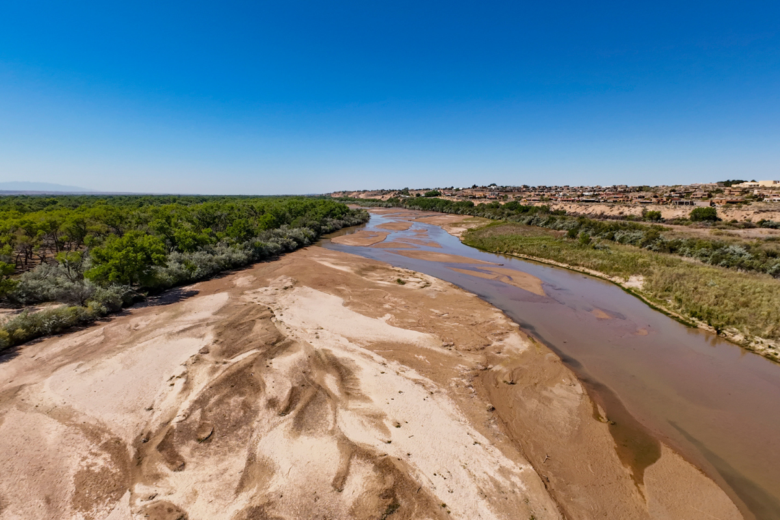
Albuquerque stopped drawing water from the Rio Grande on April 24 and processed its last surface water three days later — leaving the water authority running entirely on groundwater reserves months before summer heat peaks, a water authority spokesperson confirmed Wednesday.
The early shift marks a significant milestone in what water managers are calling one of the most difficult Rio Grande seasons in decades. One of the lowest snowpacks on record, the earliest snowmelt on record, and reservoir storage below 15% of capacity across the Rio Chama and Rio Grande system have combined to push the river toward another dry summer — repeating a pattern that has now struck the region multiple times in recent years.
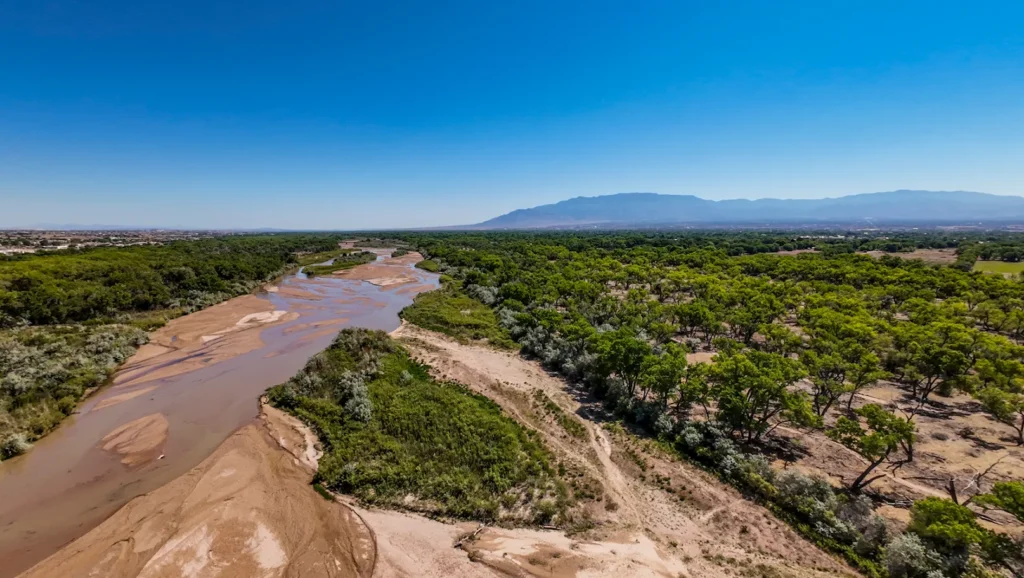
(Roberto E. Rosales)
Conserve now, officials say
When the Rio Grande runs low or dry, the Water Authority must draw on groundwater reserves meant to buffer future droughts, not bridge the current one — and those reserves are now the city’s only supply.
“A dry Rio Grande should put everyone on notice that conservation is more important now than ever,” said Barbara Baca, Bernalillo County Commissioner and chair of the Water Authority’s governing board.
Baca urged customers to follow the Water by the Numbers program:
- April–May: Water lawns two days per week
- June–August: Water lawns three days per week
- April–October: No sprinkler irrigation between 11 a.m. and 7 p.m.
Farmers: Expect less, wait longer
Irrigators across the Middle Rio Grande Valley face a difficult season alongside city residents. The Middle Rio Grande Conservancy District warned farmers to expect reduced water deliveries and longer waits between irrigation windows as river levels fall and canal operations tighten.
“Conditions this year are shaping up to be very challenging,” said MRGCD Chief Engineer and CEO Jason Casuga. “Irrigators should be prepared for reduced deliveries and longer intervals between water availability, especially later in the season if dry conditions persist.”
Wildlife: Species at risk
Five threatened or endangered species live in and along the Rio Grande, and a dry river puts them in immediate danger. The U.S. Fish and Wildlife Service said it will actively rescue Rio Grande silvery minnow from isolated pools if the river runs intermittently — returning them to stretches where water continues to flow.
Drying in the San Acacia reach south of Albuquerque began March 27, the earliest recorded onset in three decades, the Bureau of Reclamation said.
Looking ahead
The National Weather Service offers cautious hope: forecasters project equal chances of precipitation in May, with above-average monsoon odds this summer. But water managers warn that even a strong monsoon may not fully offset what has already been lost.
“Being faced with another dry year is a big challenge,” said Albuquerque Area Office Acting Area Manager John Irizarry. “Our Reclamation team will work closely with stakeholders to make the available water supply stretch as far as possible.”
More details:
- Most reservoirs along the Rio Chama and Rio Grande hold less than 15% of capacity
- Snowmelt runoff peaked earlier this year than any point in the recorded record due to unusually high temperatures
- Water managers from Reclamation, MRGCD, ABCWUA, and U.S. Fish and Wildlife are coordinating response efforts
- The Rio Grande went dry in the Albuquerque reach in 2022 and again in 2025
Conserve water this summer:
- Water lawns 2 days/week (April–May), 3 days/week (June–August)
- No sprinkler irrigation 11 a.m.–7 p.m., April through October
- Learn more: abcwua.org
Report a water waste concern:
- ABCWUA: 505-842-9287