

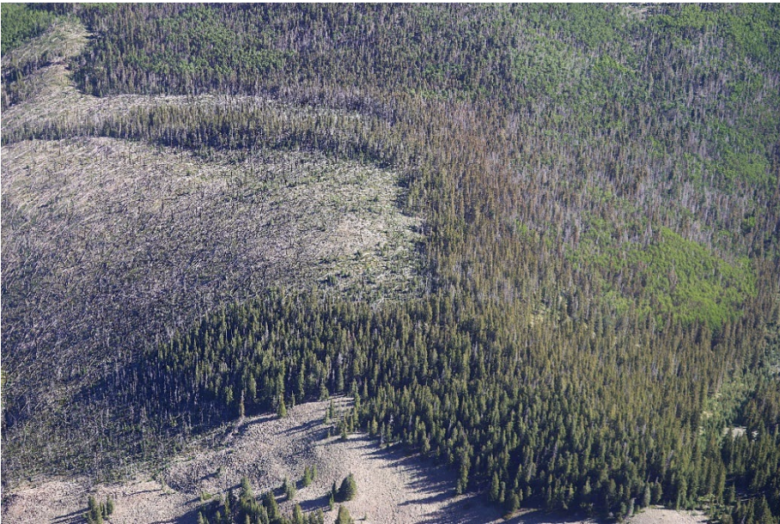
Tree deaths tripled in New Mexico during the second warmest year on record, according to new analysis of the state’s forest health from the U.S. Forest Service and New Mexico Forestry Division.
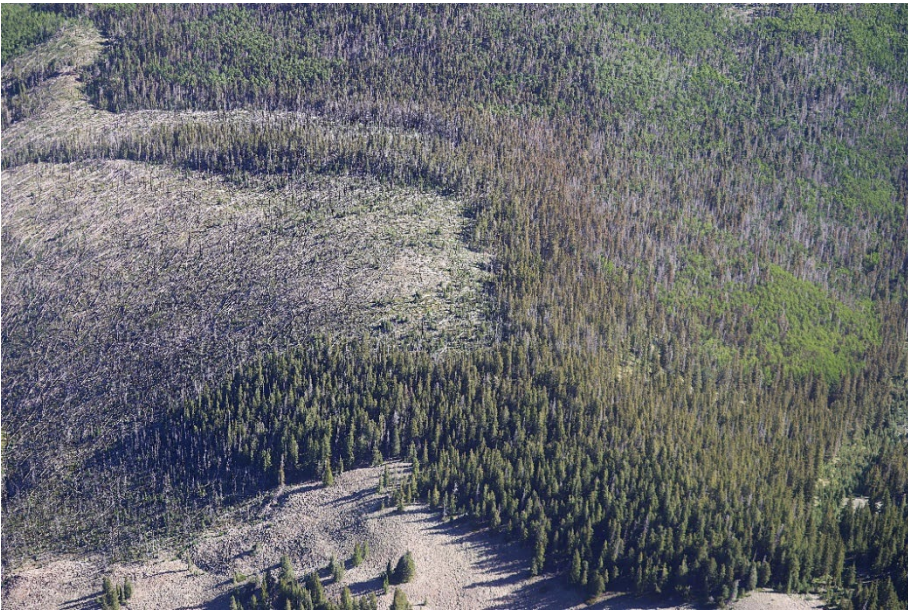
last decade, 291,000 acres with spruce beetle-killed trees have been mapped in New Mexico.
2025 saw a rapid expansion of bark beetle-caused deaths with 209,000 acres of conifers now dead — up from 67,000 acres in 2024 — mostly on national forest land managed by the USFS. “Fall and winter temperatures remained warmer and drier, allowing bark beetles to remain active late in the season,” the report concluded. “Large areas of ponderosa and piñon forests saw significant mortality from bark beetles, especially in the southern part of the state. Areas near burn scars from large wildfires continue to experience bark beetle attack on residual trees.”
New Mexico’s forests under threat
Findings from 2025 statewide survey
—
Beetle-killed conifer forest increased 211%, mostly on national forest lands
Defoliation (distinct from mortality) decreased 51%
Total acreage with damage decreased 6%
Forests impacted by drought and heat increased 66%
If there is good news in the report, it is that a virus infecting some of the most common insects causing defoliation greatly reduced the number of acres showing a loss of leaf or needle coverings. Insect infestations of the western spruce budworm, Douglas-fir tussock moth, western tent caterpillar, needleminers and scale insects was down 51% from 327,000 acres in 2024 to 160,000 acres in 2025.
Still, the number of forest acres under threat increased 6% in just one year and the number of acres threatened by drought and temperature were up a whopping 66%, the report’s authors say.
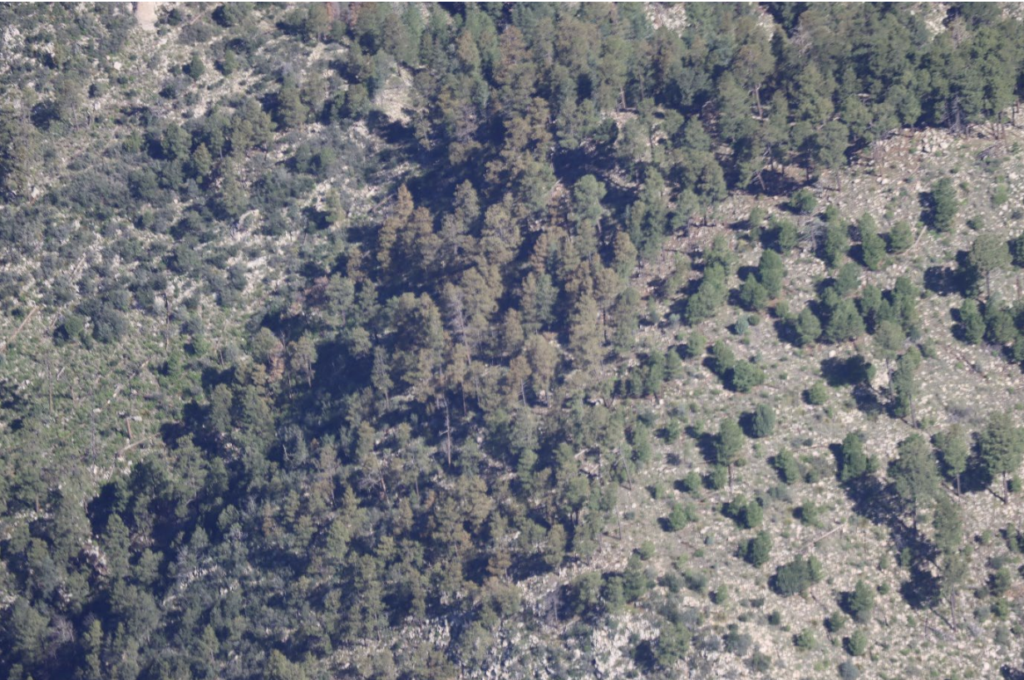
Crystal Tischler, USFS.
“Our forests have exceeded the land’s carrying capacity,” said Victor Lucero, the state’s forest health manager. “No matter what, disturbance events will try to rebalance our ecosystems, whether it’s through human intervention, like proactive thinning, or biological events such as pest outbreaks or wildfire. We can manage disturbances to prevent catastrophic events like these in the future.”
Read more from the report here.
Share this story and start a conversation